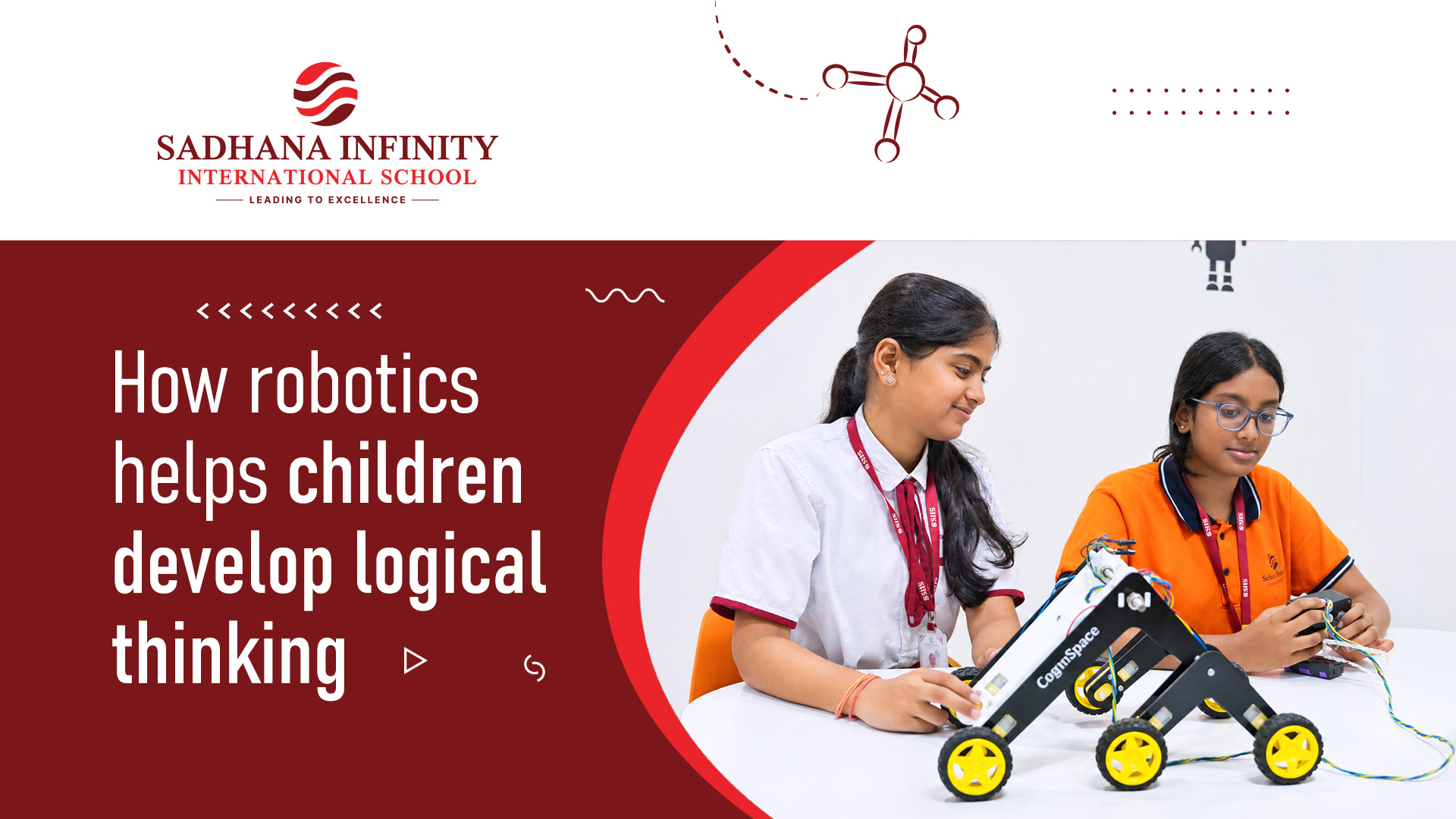
In a world where technology is constantly evolving, helping children develop the ability to think, reason and solve problems is more important than ever. One of the most engaging ways to nurture these skills is through robotics. By combining creativity, experimentation and hands-on learning, robotics introduces children to the fundamentals of logical thinking from an early age.
More than simply building machines or programming movements, robotics for kids creates opportunities for children to understand how things work, make decisions and find solutions independently.
1. Encourages Step-by-Step Thinking
Logical thinking begins with understanding that every action has a sequence. Whether children are assembling a simple robot or programming it to move in a particular direction, they learn to break down a task into smaller, manageable steps.
They begin to understand that every instruction has a purpose and that the order in which instructions are given can change the outcome. This develops their ability to organise thoughts, recognise patterns and approach challenges systematically.
2. Develops Problem-Solving Abilities
What happens when a robot does not move as expected? Children learn to pause, observe, identify what went wrong and try a different approach.
This process encourages them to look beyond the immediate problem and explore possible solutions. Instead of depending on ready-made answers, they develop the confidence to experiment, learn from mistakes and improve their approach.
Over time, these experiences strengthen their analytical thinking and decision-making abilities.
3. Introduces the Basics of Coding and Computational Thinking
Robotics introduces children to fundamental concepts such as sequencing, patterns, instructions and cause and effect. These concepts form the foundation of computational thinking.
As children progress, they begin to understand how a series of commands can produce a specific outcome. They learn to predict results, identify errors and refine instructions.
With the growing influence of AI robotics, these early experiences also help children become familiar with the technologies shaping the future.
4. Strengthens Creativity Through Experimentation
Logical thinking and creativity go hand in hand. Robotics gives children the freedom to explore ideas, design solutions and bring their imagination to life.
A simple activity, such as building a robot that can navigate an obstacle course, encourages children to think of different possibilities. They may try multiple designs, change the arrangement of components and experiment with new instructions until they achieve the desired result.
Such activities help children understand that there can be several ways to solve a problem.
5. Encourages Collaboration and Communication
Robotics activities often involve working in small groups, sharing ideas and solving challenges together. Children learn to explain their thinking, listen to different perspectives and work towards a common goal.
These interactions develop communication, teamwork and the ability to approach problems from different viewpoints.
They also help children understand that learning becomes more meaningful when ideas are explored together.
6. Builds Confidence Through Hands-On Learning
One of the most rewarding aspects of robotics is seeing an idea turn into something tangible. When children successfully build a robot or make it perform a task, they experience the satisfaction of bringing their thinking to life.
Every successful attempt builds confidence, while every challenge teaches perseverance.
This hands-on approach makes abstract concepts easier to understand and encourages children to become active participants in their own learning journey. Such experiences make robotics for kids an engaging way to develop practical skills alongside logical reasoning.
Making Robotics a Meaningful Part of Early Education
Introducing robotics for kids at the right age can make a significant difference in how children approach learning. Through age-appropriate activities, guided experimentation and practical experiences, they can gradually develop the ability to think independently and approach challenges with curiosity.
The growing importance of Robotics Education in Hyderabad also reflects the need for schools to introduce children to future-ready learning experiences that go beyond traditional classroom methods.
At Sadhana Infinity International School, learning is centred on helping children discover their abilities through a broad spectrum of academic and experiential opportunities. As one of the international schools in Nallagandla, the school recognises the importance of nurturing curiosity, creativity and independent thinking alongside academic development.
Even at the foundational stage, a quality preschool in Nallagandla can create opportunities for children to explore patterns, understand sequences, experiment with simple activities and develop early problem-solving skills.